
California Recent Bookings
California recent bookings show who was arrested and booked into county jails. Each of California's 58 counties keeps its own booking records. Most sheriff departments post this information online within hours of an arrest. You can search these records by name or booking number to find out when someone was booked, what charges they face, and where they are held. California law requires agencies to share arrest information with the public. This makes it easy to look up recent bookings from your computer or phone any time.
California Booking Records Quick Facts
Where to Find California Booking Records
County sheriff departments maintain booking records in California. When police arrest someone, they take that person to the local county jail for booking. Staff collect personal information, take photos and fingerprints, and log the charges. This creates the booking record. Most California counties post these records online within a few hours. Some update their websites every 15 minutes through systems that connect directly to the jail database.
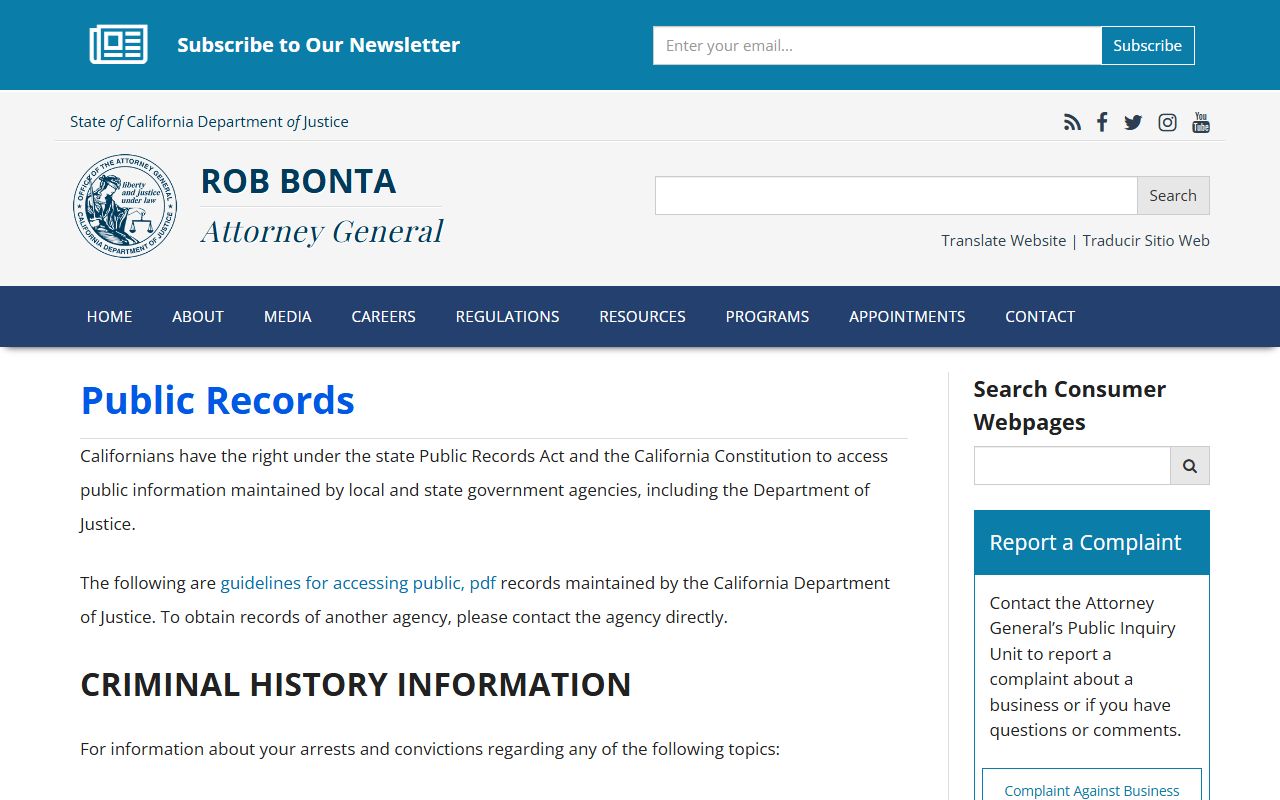
Each county runs its own system. Large counties like Los Angeles, San Diego, and Orange have custom search portals. Smaller counties use shared software platforms. The California Department of Justice explains public access rules under the Public Records Act. State law treats arrest records as public information when the person is still in custody or was released within the past 60 days.
California law requires agencies to provide contemporaneous arrest information to the public. This means they must share details soon after booking happens. Most counties meet this by posting data to their websites each day. Some counties publish booking logs as PDF files. Others have searchable databases where you type in a name.
The Board of State and Community Corrections oversees jail standards statewide. They collect data from every county jail through the Jail Profile Survey. You can view population stats and facility information at their online query system. This helps you understand how busy each jail is and what capacity they operate at in California.
How to Search Recent Bookings Online
Most counties let you search by name. Go to the county sheriff website and find their inmate search or booking log page. Type in a first and last name. The system shows results for people booked into that county jail. You see booking date, charges, bail amount, and booking number. Some systems also show the court date and housing location within the jail.
Large counties have advanced search options. Los Angeles County uses the LASD Inmate Information Center where you can search by name, booking number, or arrestee number. The system needs a CAPTCHA to prevent bots. San Diego posts results at Who's In Jail which goes offline for maintenance each Wednesday at noon. Orange County requires you to create a free account before searching at their public services portal.
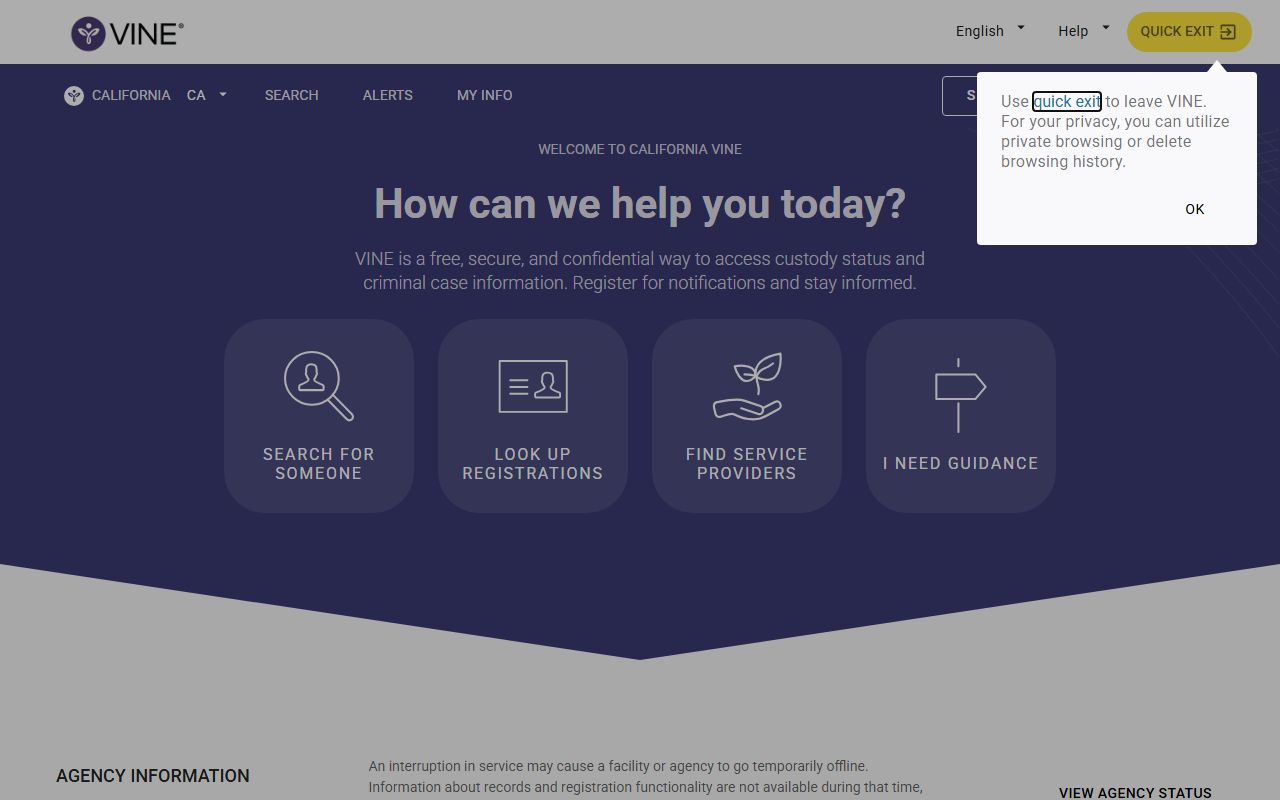
The VINE system provides another way to check custody status. VINE stands for Victim Information and Notification Everyday. Call 1-877-411-5588 or visit vinelink.vineapps.com/state/CA to search all California jails at once. VINE updates every 15 minutes from jail booking systems across the state. The service is free and anonymous. You can register to get alerts when someone's custody status changes.
Not all counties have online search. Some small rural counties post booking logs as PDF files instead. Modoc County and Trinity County require phone calls to check if someone is in custody. But most California residents live in counties with full online search available right now.
What Information Recent Bookings Show
Booking records contain basic facts about the arrest. You see the person's full name, age, and sometimes their home city. The booking date tells you when they arrived at the jail. The booking number is a unique ID for that specific jail stay. If someone gets arrested multiple times, each booking gets its own number.
Charges appear as codes or written descriptions. California uses Penal Code sections to label crimes. For example, PC 459 means burglary and HS 11350 means drug possession. Some systems spell out the full charge name. Others just show the code. Bail amount shows how much money must be posted for release. If it says "No Bail" that means the person must see a judge before release.
Recent bookings typically show the following:
- Full legal name and any aliases
- Age or date of birth
- Booking date and time
- Booking number or inmate ID
- Charges filed with code sections
- Bail amount or hold status
- Arresting agency name
Some counties include mugshots in their online records. Others do not post photos due to privacy policies. Release date may appear if the person already left custody. Most systems show the scheduled court date for the first appearance. This helps family and friends know when hearings will take place.
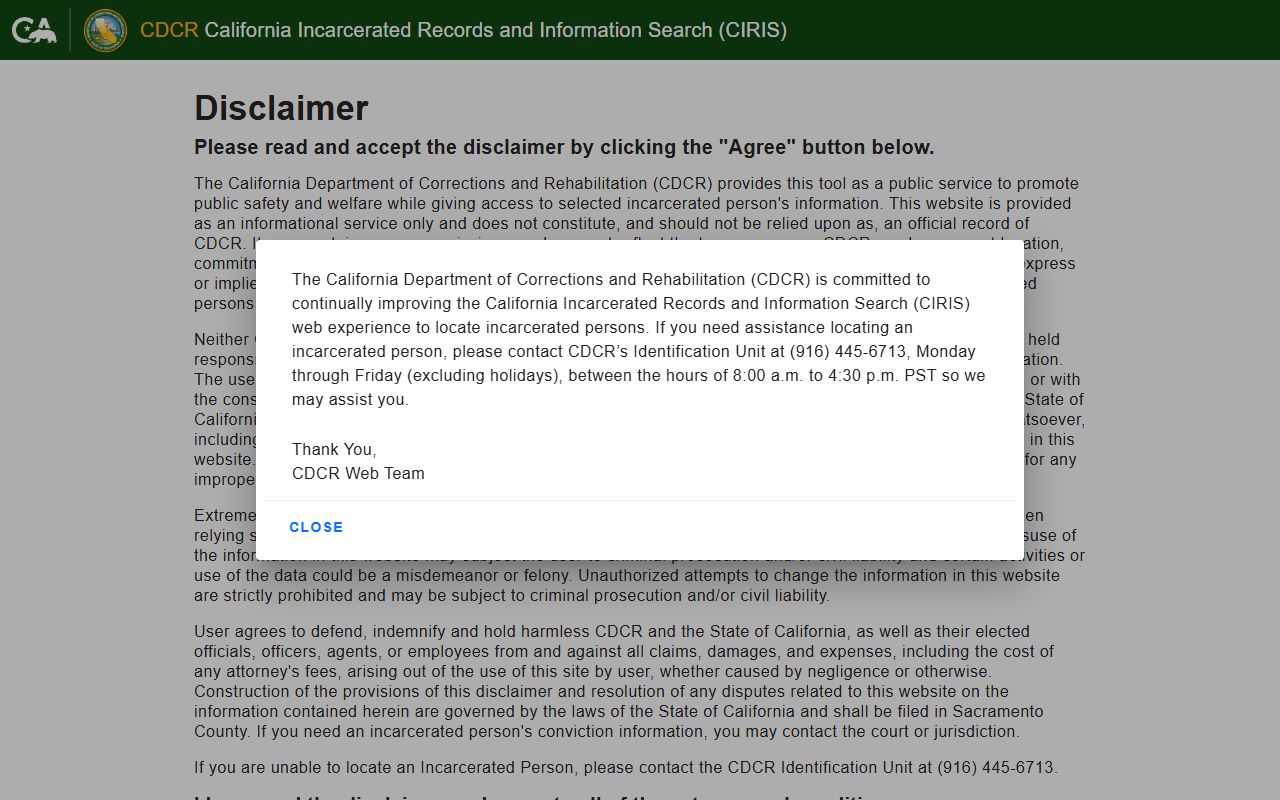
Note: County jail records are different from state prison records maintained by the California Department of Corrections and Rehabilitation.
California Laws on Booking Records
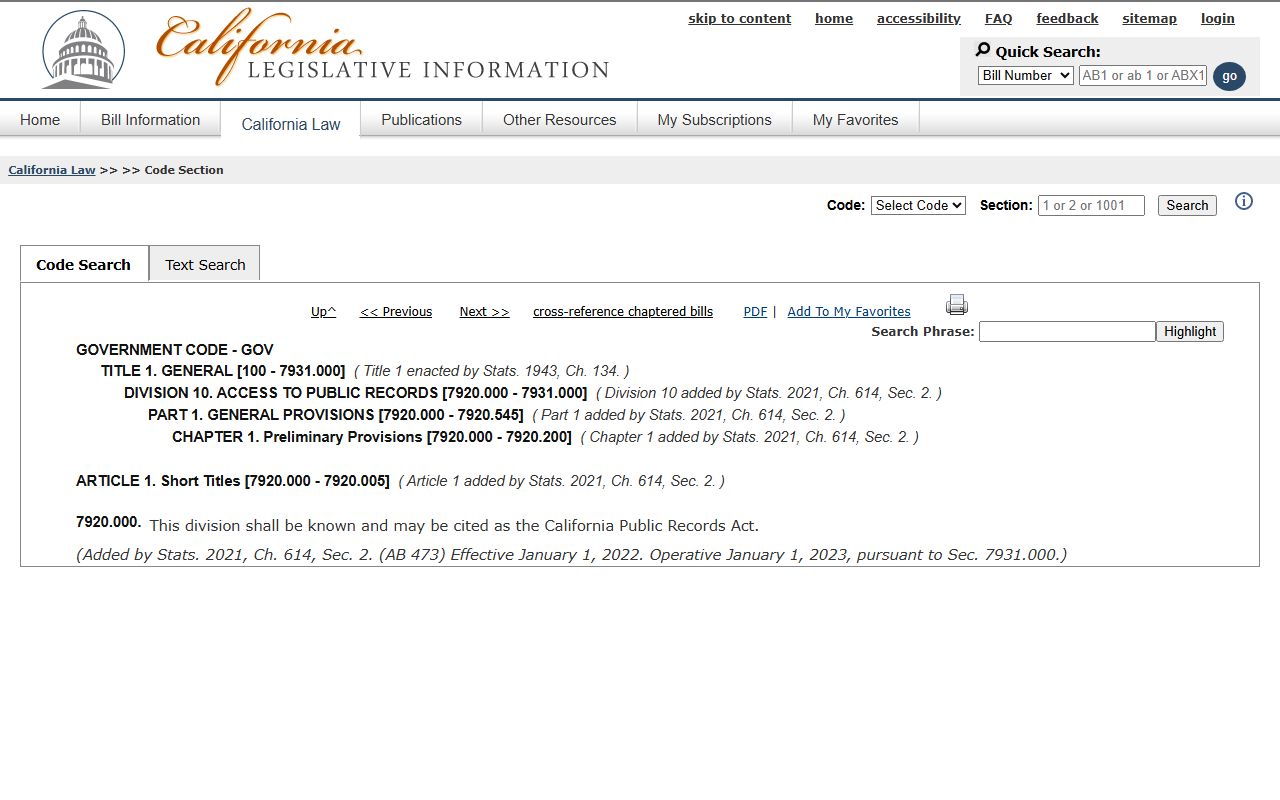
California has specific laws about who can access booking information. Government Code Section 7920.000 and related sections establish the California Public Records Act. This law gives the public the right to inspect and copy records held by state and local agencies. Booking records fall under this law when certain conditions are met.
Government Code Section 6254(f) sets rules for when arrest information must be disclosed. Agencies must provide access if the person is currently in custody or if their release happened within the past 60 days. After 60 days from release, the records may not appear on public websites. You might need to submit a formal public records request to get older booking information.
Some arrests do not appear on public websites at all. Juvenile bookings stay confidential in most cases. Certain sensitive cases involving victims of crime may have limited details. Undercover operations or ongoing investigations sometimes delay public posting of booking data. But these exceptions are rare. Most adult arrests show up online within hours.
Penal Code Section 13300 covers local summary criminal history information. This law defines what counts as criminal history and who can access it. While full criminal history reports are restricted, contemporaneous arrest records remain public. The difference is that recent bookings show current custody status while full rap sheets show entire criminal backgrounds going back years.
Recent California laws address posting booking photos on social media. Some counties removed mugshots from public websites after concerns about misuse. Commercial sites that charged fees to remove booking photos faced new restrictions under state law. The focus shifted to balancing public safety with individual privacy rights. Each county decides its own policy on displaying booking photos online.
County Jail Booking Systems
California counties use different software to manage bookings. Several companies provide jail management systems that include public search portals. The most common platforms are CitizenRIMS, ATIMS, JIMS, and custom systems built for specific counties. Each has its own search interface but they all serve the same purpose of showing who is in custody.
Large counties built their own systems. Los Angeles County serves a population over 10 million and operates multiple jail facilities. Their Inmate Information Center handles thousands of searches per day. The system shows custody at Men's Central Jail, Twin Towers, and several other facilities across LA County. For general custody questions call (213) 473-6100.
San Diego County operates the Who's In Jail system. It covers the San Diego Central Jail and other facilities. The site goes down for maintenance every Wednesday at noon. During that time you must call (619) 409-5000 for inmate information. Alameda County uses a search portal at acgov.org/sheriff_app for Santa Rita Jail in Dublin. They require JavaScript and a CAPTCHA to search.
Many smaller counties adopted shared systems. CitizenRIMS serves Del Norte, Lake, El Dorado, Siskiyou, Inyo, and several other rural counties. ATIMS appears in San Joaquin and Placer counties. These platforms save money by spreading development costs across multiple agencies. They offer similar search features as custom systems but with standardized layouts.
Some counties still post booking logs as simple lists or PDF files. Butte County publishes weekly logs at their website. Humboldt County uploads daily reports each morning. These files show all bookings for that time period in chronological order. You can download the file and search it with your computer's find function.
How to Request Booking Records
Most booking searches happen online at no cost. But sometimes you need certified copies or detailed reports. Each county has a records unit that handles these requests. You can ask for booking sheets, arrest reports, or incident summaries. The process varies by county but most accept requests by mail, email, or through online portals.
Los Angeles County uses a public records portal where you submit requests electronically. Email PRArequest@lasd.org or call (323) 890-5050 for help with requests. Booking photographs cost $16 and police reports cost $4 per copy in LA County. Other counties have their own fee schedules. San Diego charges $20 for crime reports with the first copy free to victims.
Agencies must respond within 10 days under the California Public Records Act. They can take a 14-day extension if the request is complex. Simple booking record requests usually get answered faster. Many counties provide copies within a few days. If you need rush service, ask if expedited processing is available for an extra fee.
Some counties use third-party portals like NextRequest or GovQA. These systems let you track your request status online. You get updates when the agency processes your request and when records are ready. Riverside County uses riversidesheriff.govqa.us for public records requests. San Bernardino uses sanbernardinocounty.nextrequest.com.
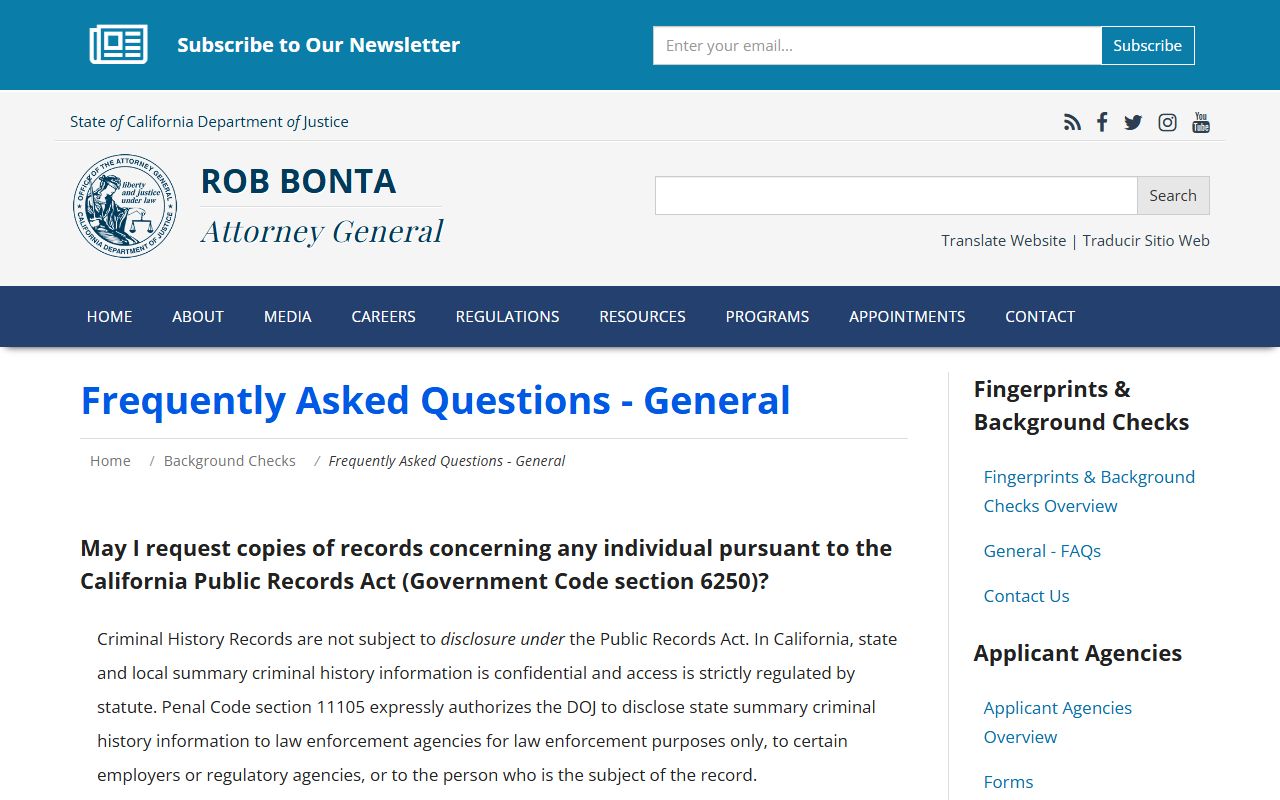
Note: Public booking records differ from full criminal background checks which require fingerprints and fees.
State Prison Inmates vs County Jail Bookings
County jails and state prisons serve different functions. Jails hold people awaiting trial or serving short sentences under one year. Prisons house convicted felons serving longer terms. When you search recent bookings, you only see county jail data. State prison inmates appear in a separate system run by the California Department of Corrections and Rehabilitation.
The California Incarcerated Records and Information Search system lets you find state prison inmates. Search by name or CDCR number to see commitment counties, admission dates, and parole hearing outcomes. This database covers people in state custody but not county jails. If someone transferred from county jail to state prison, they will no longer show up in county booking searches.
Contact CDCR at (916) 324-7308 for general questions about state prisons. The Identification Unit at (916) 445-6713 helps with inmate lookups during business hours Monday through Friday. Victim Services has a toll-free line at 1-877-256-6877. VINE also covers state prison custody changes so you can register for alerts when an inmate transfers or gets released from state facilities.
Tips for Searching California Bookings
Start with the county where the arrest happened. If you do not know which county, try the VINE system which searches all counties at once. Use common nicknames if the full legal name does not work. Some people get booked under the name they give at arrest which might differ from what you expect. Try variations like Bob instead of Robert or Liz instead of Elizabeth.
Check the booking date range. Most online systems show only current inmates or bookings from the past few days. If the arrest was weeks ago and the person already left jail, they might not appear on the current roster. Look for archive or historical booking log sections on the county website. Some counties keep old logs available as PDF downloads.
Booking information changes as cases move through the system. Charges can get added, dropped, or modified. Bail amounts may change after a court hearing. If you need current status, check back regularly or register for VINE alerts. The alerts notify you automatically when custody status changes so you do not have to keep searching manually.
Be aware of maintenance windows. Several counties take their systems offline for updates. San Diego shuts down every Wednesday at noon. Sacramento and Santa Clara go offline Monday mornings between 12:30 AM and 2 AM. If you cannot access a search portal, try again after the maintenance period ends.
Browse Recent Bookings by County
Each California county maintains its own booking records through the sheriff department. Select a county below to find their online search portal, contact information, and local jail facilities.
View All 58 California Counties
Recent Bookings in Major Cities
Most California cities use their county jail system for bookings. Find out where arrests in your city are processed and how to search for recent bookings.